8- Reiki is:
Reiki is a method of healing that has its roots in ancient Tibetan practices that were used to harmonize and heal the body, mind, and spirit.
Reiki is derived from the Japanese, and means Universal Life Energy.
Reiki is an ancient healing method that is easy to learn, and which can provide a real enrichment of your everyday life.
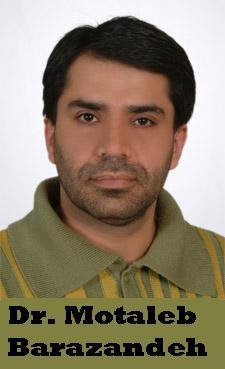
By: Dr Motaleb Barazandeh, faculty member of Universal Academy of Parapsychology
Reference: Honervogt, Tanmaya. Neiman, Carol. (2005) Reiki, London: Gaia Books Publications.
Tuesday, 22 May 2007

6- Reiki is:
6- Reiki is:
Reiki is one of paths to enlightenment.
Reiki is primarily perceived as a practice for healing the body, but it is also a method for healing the mind and spirit.
Reiki is a power to reunite the trinity of Mind – Body - Spirit in their optimal state of harmony.
Reiki is healing energy in its truest sense.
Reiki is a healing system that is a safe, natural and holistic way of treating many acute and chronic conditions and bringing about spiritual, mental and emotional well beings. These conditions include: stress, sinusitis, menstrual problems, cystitis, migraine, asthma, M. E. (chronic fatigue syndrome), eczema, arthritis, menopausal problems, back pain, anxiety, tension, depression, isomnia and sciatica.
Reiki is suitable for everyone, including the very young and the elderly, pregnant women and those recovering from surgery.
Reiki is not only a healing method – it also provides a method for developing yourself spiritually, although this aspect is often underemphasized.
Reiki is not just another therapy, although it is, without doubt, highly therapeutic. It offers itself as a spiritual discipline and pathway.
By: Dr Motaleb Barazandeh, faculty member of Universal Academy of Parapsychology
Reference: Mckenzie, Eleanor. (2006) Healing Reiki, London: Bounty Books Publications.
Reiki is one of paths to enlightenment.
Reiki is primarily perceived as a practice for healing the body, but it is also a method for healing the mind and spirit.
Reiki is a power to reunite the trinity of Mind – Body - Spirit in their optimal state of harmony.
Reiki is healing energy in its truest sense.
Reiki is a healing system that is a safe, natural and holistic way of treating many acute and chronic conditions and bringing about spiritual, mental and emotional well beings. These conditions include: stress, sinusitis, menstrual problems, cystitis, migraine, asthma, M. E. (chronic fatigue syndrome), eczema, arthritis, menopausal problems, back pain, anxiety, tension, depression, isomnia and sciatica.
Reiki is suitable for everyone, including the very young and the elderly, pregnant women and those recovering from surgery.
Reiki is not only a healing method – it also provides a method for developing yourself spiritually, although this aspect is often underemphasized.
Reiki is not just another therapy, although it is, without doubt, highly therapeutic. It offers itself as a spiritual discipline and pathway.
By: Dr Motaleb Barazandeh, faculty member of Universal Academy of Parapsychology
Reference: Mckenzie, Eleanor. (2006) Healing Reiki, London: Bounty Books Publications.
5- Reiki is:
5- Reiki is:
Reiki is an ancient hands–on healing technique.
Reiki is a simple and natural healing method through which we transfer universal life energy for healing from one person to another through the hands.
Reiki is a Japanese word literally meaning Universal Life Energy.
Reiki is defined as being the power that acts and lives in all created matter.
By: Dr Motaleb Barazandeh, faculty member of Universal Academy of Parapsychology
Reference: Honervogt, Tanmaya. (2006) Reiki for Emotional Healing, London: Gaia Books Publications.
Reiki is an ancient hands–on healing technique.
Reiki is a simple and natural healing method through which we transfer universal life energy for healing from one person to another through the hands.
Reiki is a Japanese word literally meaning Universal Life Energy.
Reiki is defined as being the power that acts and lives in all created matter.
By: Dr Motaleb Barazandeh, faculty member of Universal Academy of Parapsychology
Reference: Honervogt, Tanmaya. (2006) Reiki for Emotional Healing, London: Gaia Books Publications.
4- Reiki is:
4- Reiki is:
Reiki works to heal on the physical, subtle and casual levels.
Reiki is divine power.
Reiki is a Japanese word for universal life force energy.
Reiki is a very ancient science hidden for thousands of years.
By: Dr Motaleb Barazandeh, faculty member of Universal Academy of Parapsychology
Reference: Sharma, Rashmi & Maharaj Krishna. (2004) The Practical Book of Reiki, Delhi: Pustak Mahal Publications.
Reiki works to heal on the physical, subtle and casual levels.
Reiki is divine power.
Reiki is a Japanese word for universal life force energy.
Reiki is a very ancient science hidden for thousands of years.
By: Dr Motaleb Barazandeh, faculty member of Universal Academy of Parapsychology
Reference: Sharma, Rashmi & Maharaj Krishna. (2004) The Practical Book of Reiki, Delhi: Pustak Mahal Publications.
1- Reiki is:
1- Reiki is:
Reiki is a simple hands-on healing technique.
Reiki is a healing art that pass from teacher to student by a series of mystic attunements that are carried out during a Reiki training course.
Reiki is a process of healing that is brought about through the use of hands laid on the body in certain positions.
By: Dr Motaleb Barazandeh, faculty member of Universal Academy of Parapsychology
Reference: Parkes, Chris & Penny. (2004) 15-minute reiki, London: Thorsons Publications.
Reiki is a simple hands-on healing technique.
Reiki is a healing art that pass from teacher to student by a series of mystic attunements that are carried out during a Reiki training course.
Reiki is a process of healing that is brought about through the use of hands laid on the body in certain positions.
By: Dr Motaleb Barazandeh, faculty member of Universal Academy of Parapsychology
Reference: Parkes, Chris & Penny. (2004) 15-minute reiki, London: Thorsons Publications.
Universal Academy of Parapsychology - 2
Aims
Our Goal is to be one of the most ‘prestigious' academies for distance learning. With our intentions we realistically foresee ourselves to be the top UK metaphysical courses providers. The Academy promotes research and public studying into parapsychological phenomena.
The UAP advocates use of the scientific method. Psychic experiences should be studied in the same way as other human experiences. Evidence should be evaluated accurately and compassionately.
UAP Works within the private sector and is an independent standing self regulating professional teaching course.
We are a VAT Registered Limited Company, Registered in England. Company Number:05984436. We are not partners in business or associated in any way to any 'other' organization/s or political group/s other than in the cases of Memberships and Affiliation and so on to other professional bodies.
UAP Ltd. is a distance learning Academy that develops International certificates and diploma qualifications in the field of Metaphysics and Parapsychology. Therefore the student can study on his or her own schedule rather than a schedule set by a university.
UAP is not under ownership of any religious or metaphysical organization and is non-denominational. Students from any faith or creed or none are welcome. UAP is truly international in scope and does not restrict itself to the outmoded or arbitrary educational norms of any one country. Administration is co-ordinated partly from the United Kingdom and partly from overseas, and tutors may be located in any country where adjunct faculty reside. UAP is a class of institution that is increasingly prominent and accepted all over the world.
UAP has made its program affordable for people of all walks of life, keeping tuition prices low, and creating payment plans for every budget. It gives us great pleasure to be instrumental in enriching the professional and personal development of students all over the world.
Our Goal is to be one of the most ‘prestigious' academies for distance learning. With our intentions we realistically foresee ourselves to be the top UK metaphysical courses providers. The Academy promotes research and public studying into parapsychological phenomena.
The UAP advocates use of the scientific method. Psychic experiences should be studied in the same way as other human experiences. Evidence should be evaluated accurately and compassionately.
UAP Works within the private sector and is an independent standing self regulating professional teaching course.
We are a VAT Registered Limited Company, Registered in England. Company Number:05984436. We are not partners in business or associated in any way to any 'other' organization/s or political group/s other than in the cases of Memberships and Affiliation and so on to other professional bodies.
UAP Ltd. is a distance learning Academy that develops International certificates and diploma qualifications in the field of Metaphysics and Parapsychology. Therefore the student can study on his or her own schedule rather than a schedule set by a university.
UAP is not under ownership of any religious or metaphysical organization and is non-denominational. Students from any faith or creed or none are welcome. UAP is truly international in scope and does not restrict itself to the outmoded or arbitrary educational norms of any one country. Administration is co-ordinated partly from the United Kingdom and partly from overseas, and tutors may be located in any country where adjunct faculty reside. UAP is a class of institution that is increasingly prominent and accepted all over the world.
UAP has made its program affordable for people of all walks of life, keeping tuition prices low, and creating payment plans for every budget. It gives us great pleasure to be instrumental in enriching the professional and personal development of students all over the world.
Universal Academy of Parapsychology - 1
Our Vision
Our vision is to facilitate distance learning for people who seek to transform their lives. Our teachers create a caring and supporting environment for students on the path to enlightenment.
Our vision is to facilitate distance learning for people who seek to transform their lives. Our teachers create a caring and supporting environment for students on the path to enlightenment.
Universal Academy of Parapsychology
Universal Academy of Parapsychology
UAP Founded by an international group of educators and change agents, UAP is a non-traditional institution whose mission is to provide global, innovative and non-traditional learning opportunities.
UAP is a distance learning company that provides the most recent information and the highest quality of educational content and affordable distance courses in different fields of metaphysics for all people of all cultures.
UAP Founded by an international group of educators and change agents, UAP is a non-traditional institution whose mission is to provide global, innovative and non-traditional learning opportunities.
UAP is a distance learning company that provides the most recent information and the highest quality of educational content and affordable distance courses in different fields of metaphysics for all people of all cultures.
Wednesday, 16 May 2007
Reiki - Dr. Motaleb Barazandeh (Ph.D)
Reiki - 2
The word Reiki (pronounced Ray-Key) is made of two Japanese words - Rei which means "God's Wisdom or the Higher Power" and Ki which is "life force energy". So Reiki is actually "spiritually guided life force energy" or “universal life-force energy”.
It is administered by "laying on hands" in different hand positions either directly on or just above the body, so that the energy worker allows for the flow of energy through their body. Reiki re-establishes a normal energy flow of ki (life force energy) throughout the system, which in turn can enhance and accelerate the body's innate healing ability. The client’s body then draws off the amount of energy that is required. The Reiki energy goes to exactly where it is needed so a Reiki Practitioner never needs to diagnose nor prescribe – nor does ethics or law allow them to.
The ability to use Reiki is not taught in the usual sense, but is transferred to the student during a Reiki class. This ability is passed on during an "attunement" given by a Reiki master and allows the student to tap into an unlimited supply of "life force energy" to improve one's health and enhance the quality of life.
Reiki energy is a wonderful complement to other treatments. It is strongly recommended that you do not discontinue any medications or session plan your medical practitioner or other holistic healer has deemed necessary, unless you first speak with them personally.
The Benefits of Reiki:
Physical:
Reiki works on all chronic and acute illnesses, like fatigue, headaches, back pain, flu, and also serious problems like cancer, heart disease and skin problems etc, by strengthening immune system.
Mental:
The mind calms and becomes less erratic. You no longer feel stressed.
Emotional:
Brings emotional balance and eases depression, insomnia, lack of confidence, addiction and fear-based illnesses.
Spiritual:
Increased intuition leads to a more purposeful direction in life. Feel connected and in tune with the universe.
The five principals of Reiki:
They offer a simple guideline for daily conduct with others and self. They are:
• Just for today, I will not anger
• Just for today, I will not worry
• Just for today, I will be grateful
• Just for today, I will work hard on myself
• Just for today, I will be kind to others
Reiki Levels:
Level One: Takes four to five days. The students learn the history of Reiki, the energy system, the nature of the Reiki energy, the five principles of Reiki, the three pillars of Reiki, the hand positions, self-healing and helping others.
Level Two: Takes two weeks. The students learn five Japanese healing symbols and distance Reiki sending. The symbols are used for manifesting permanent changes in life, empowering goals etc.
Level Three ‘A’ Master Practitioner: Takes four sessions. The students learn meditation techniques, Reiki Crystal Grids, Healing Attunement, the Violet Breath, and Psychic Surgery. The Master symbol is given but the student is not able to attune others.
Level Three ‘B’ Master/Teacher: Takes two days. The master symbol is introduced and practiced. So the students learn how to attune others to the Reiki energy and are able to teach Reiki to others.
The word Reiki (pronounced Ray-Key) is made of two Japanese words - Rei which means "God's Wisdom or the Higher Power" and Ki which is "life force energy". So Reiki is actually "spiritually guided life force energy" or “universal life-force energy”.
It is administered by "laying on hands" in different hand positions either directly on or just above the body, so that the energy worker allows for the flow of energy through their body. Reiki re-establishes a normal energy flow of ki (life force energy) throughout the system, which in turn can enhance and accelerate the body's innate healing ability. The client’s body then draws off the amount of energy that is required. The Reiki energy goes to exactly where it is needed so a Reiki Practitioner never needs to diagnose nor prescribe – nor does ethics or law allow them to.
The ability to use Reiki is not taught in the usual sense, but is transferred to the student during a Reiki class. This ability is passed on during an "attunement" given by a Reiki master and allows the student to tap into an unlimited supply of "life force energy" to improve one's health and enhance the quality of life.
Reiki energy is a wonderful complement to other treatments. It is strongly recommended that you do not discontinue any medications or session plan your medical practitioner or other holistic healer has deemed necessary, unless you first speak with them personally.
The Benefits of Reiki:
Physical:
Reiki works on all chronic and acute illnesses, like fatigue, headaches, back pain, flu, and also serious problems like cancer, heart disease and skin problems etc, by strengthening immune system.
Mental:
The mind calms and becomes less erratic. You no longer feel stressed.
Emotional:
Brings emotional balance and eases depression, insomnia, lack of confidence, addiction and fear-based illnesses.
Spiritual:
Increased intuition leads to a more purposeful direction in life. Feel connected and in tune with the universe.
The five principals of Reiki:
They offer a simple guideline for daily conduct with others and self. They are:
• Just for today, I will not anger
• Just for today, I will not worry
• Just for today, I will be grateful
• Just for today, I will work hard on myself
• Just for today, I will be kind to others
Reiki Levels:
Level One: Takes four to five days. The students learn the history of Reiki, the energy system, the nature of the Reiki energy, the five principles of Reiki, the three pillars of Reiki, the hand positions, self-healing and helping others.
Level Two: Takes two weeks. The students learn five Japanese healing symbols and distance Reiki sending. The symbols are used for manifesting permanent changes in life, empowering goals etc.
Level Three ‘A’ Master Practitioner: Takes four sessions. The students learn meditation techniques, Reiki Crystal Grids, Healing Attunement, the Violet Breath, and Psychic Surgery. The Master symbol is given but the student is not able to attune others.
Level Three ‘B’ Master/Teacher: Takes two days. The master symbol is introduced and practiced. So the students learn how to attune others to the Reiki energy and are able to teach Reiki to others.
Yoga - Dr. Motaleb Barazandeh (Ph.D)
Yoga - 2
The word Yoga is an ancient Sanskrit for "union", which refers to the merging of the body, mind, and spirit. So Yoga, in general, is a spiritual practice or discipline that helps the individual unify his/her body, mind, and heart. Although many people know Yoga as a type of exercise system that stretches and strengthens the body through various poses known as asanas (postures), it is more than an exercise routine. The breathing techniques and relaxation release tension and stress, and teach you to relax and enjoy life. Deep Relaxation is traditionally the conclusion and culmination of every Yoga session. The meditation practice teaches to calm the mind and brings emotional balance. It also increases awareness of what is happening in your own body and mind. For example some of yogis can increase or decrease their heart beat at will. Finally it increases your awareness. If you stay with yoga long enough, you may discover a "spiritual awakening" Therefore not only does yoga increase circulation, improve flexibility and muscle tone or relieve chronic pain and alleviate anxiety-related disorders but also supports us in developing personal practices that cultivate a sense of light, harmony, health, and well-being.
Types of yoga:
There are many types of yoga. Amongst the most popular are:
Hatha Yoga: deals with physical postures and breathing.
Raja yoga: western kind of Yoga. It unites the physical, mental and spiritual aspects of the self. It is the most practical.
Karma Yoga: spiritual practice to help the individual unify body, mind, and heart through certain practices in one’s daily life.
Bhakti Yoga: a devotional form that includes chanting and worship practices.
Jnana yoga: the Yoga of knowledge, they find their peace through the study of scriptures.
Kundalini yoga: focuses on the release of internal energy, using postures, breathing and meditation.
Ashtanga Yoga: a fast flowing, aerobic yoga workout.
Iyengar Yoga: strong, precise style of yoga for the fitness conscious.
Vini yoga: a gentler style with emphasis on healing.
Satyananda yoga: a gentle style of traditional Hatha Yoga, suitable for all age and shape.
Bikram Yoga: a dynamic style of yoga, practiced in a heated room.
Who does Yoga?
Yoga benefits people of all ages, men and women. People young and old can gain many benefits from regular yoga practices, and asanas can be adjusted to fit physical limitations and other complications. If you want a break from treadmills or the pool etc, take a look at yoga. Not only are you striving towards physical well being, you are striving towards spiritual well being as well.
The word Yoga is an ancient Sanskrit for "union", which refers to the merging of the body, mind, and spirit. So Yoga, in general, is a spiritual practice or discipline that helps the individual unify his/her body, mind, and heart. Although many people know Yoga as a type of exercise system that stretches and strengthens the body through various poses known as asanas (postures), it is more than an exercise routine. The breathing techniques and relaxation release tension and stress, and teach you to relax and enjoy life. Deep Relaxation is traditionally the conclusion and culmination of every Yoga session. The meditation practice teaches to calm the mind and brings emotional balance. It also increases awareness of what is happening in your own body and mind. For example some of yogis can increase or decrease their heart beat at will. Finally it increases your awareness. If you stay with yoga long enough, you may discover a "spiritual awakening" Therefore not only does yoga increase circulation, improve flexibility and muscle tone or relieve chronic pain and alleviate anxiety-related disorders but also supports us in developing personal practices that cultivate a sense of light, harmony, health, and well-being.
Types of yoga:
There are many types of yoga. Amongst the most popular are:
Hatha Yoga: deals with physical postures and breathing.
Raja yoga: western kind of Yoga. It unites the physical, mental and spiritual aspects of the self. It is the most practical.
Karma Yoga: spiritual practice to help the individual unify body, mind, and heart through certain practices in one’s daily life.
Bhakti Yoga: a devotional form that includes chanting and worship practices.
Jnana yoga: the Yoga of knowledge, they find their peace through the study of scriptures.
Kundalini yoga: focuses on the release of internal energy, using postures, breathing and meditation.
Ashtanga Yoga: a fast flowing, aerobic yoga workout.
Iyengar Yoga: strong, precise style of yoga for the fitness conscious.
Vini yoga: a gentler style with emphasis on healing.
Satyananda yoga: a gentle style of traditional Hatha Yoga, suitable for all age and shape.
Bikram Yoga: a dynamic style of yoga, practiced in a heated room.
Who does Yoga?
Yoga benefits people of all ages, men and women. People young and old can gain many benefits from regular yoga practices, and asanas can be adjusted to fit physical limitations and other complications. If you want a break from treadmills or the pool etc, take a look at yoga. Not only are you striving towards physical well being, you are striving towards spiritual well being as well.
Meditation - Dr. Motaleb Barazandeh (Ph.D)
Meditation:
The term "meditation" is often used both to denote the process or technique of meditation, as well as the state "elicited" by meditation practice. Usually during meditation we concentrate on a particular object or idea, such as a flower, a candle flame, a sound, a word (mantra), an image of a deity, our breath, or, in its purest form, simply on whatever is. A beginner would benefit most from the insight meditation style: simply concentrating on the breath and whatever is. The practice of meditation will gradually reduce the stream of thoughts arising in your mind which leads to relaxation, inner peace, relationships improvements and an increase in the ability to concentrate.
Finally Meditation is one of the proven alternative therapies. It can be broadly classified under the mind-body medicine. Some people want to improve their concentration for work, study, or sports; others are looking for calm and peace of mind. Then there are people trying to answer fundamental questions about life. With regular practice, meditation can help all of us to find what we are looking for.
The term "meditation" is often used both to denote the process or technique of meditation, as well as the state "elicited" by meditation practice. Usually during meditation we concentrate on a particular object or idea, such as a flower, a candle flame, a sound, a word (mantra), an image of a deity, our breath, or, in its purest form, simply on whatever is. A beginner would benefit most from the insight meditation style: simply concentrating on the breath and whatever is. The practice of meditation will gradually reduce the stream of thoughts arising in your mind which leads to relaxation, inner peace, relationships improvements and an increase in the ability to concentrate.
Finally Meditation is one of the proven alternative therapies. It can be broadly classified under the mind-body medicine. Some people want to improve their concentration for work, study, or sports; others are looking for calm and peace of mind. Then there are people trying to answer fundamental questions about life. With regular practice, meditation can help all of us to find what we are looking for.
Parapsychology - Dr. Motaleb Barazandeh (Ph.D)
Parapsychology:
Parapsychology-Meaning "beside psychology," is a field of study concerned with the investigation of evidence for paranormal psychological phenomena (such as extrasensory perception, telepathy, clairvoyance, and psychokinesis). It is also known as psychical research. Scientists in this field, including the psychics who work daily in this field, know first hand that there are many, many details that go into maintaining a highly accurate database, and more often than not, it may take months, if not years or decades for all of the information to be obtained and founded accurately.
A long-held, common-sense assumption is that the worlds of the subjective and objective are completely distinct, with no overlap. Subjective is "here, in the head," and objective is "there, out in the world." Parapsychology is the study of phenomena suggesting that the strict subjective/objective dichotomy may instead be part of a spectrum, with some phenomena occasionally falling between purely subjective and purely objective. We call such phenomena "anomalous" because they are difficult to explain within current scientific models.
These anomalies fall into three general categories: ESP (terms are defined below), PK, and phenomena suggestive of survival after bodily death, including near-death experiences, apparitions, and reincarnation. Most parapsychologists today expect that further research will eventually explain these anomalies in scientific terms, although it is not clear whether they can be fully understood without significant (some might say revolutionary) expansions of the current state of scientific knowledge. Other researchers take the stance that existing scientific models of perception and memory are adequate to explain some or all parapsychological phenomena.
In spite of what the media often imply, parapsychology is not the study of "anything paranormal" or bizarre. Nor is parapsychology concerned with astrology, UFOs, searching for Bigfoot, paganism, vampires, alchemy, or witchcraft. In popular usage, the basic parapsychological phenomena are categorized as follows:
Telepathy: Direct mind-to-mind communication.
Precognition: Also called premonition. Obtaining information about future events, where the information could not be inferred through normal means. Many people report dreams that appear to be precognitive.
Clairvoyance: Sometimes called remote viewing; obtaining information about events at remote locations, beyond the reach of the normal senses.
ESP: Extra-sensory perception; a general term for obtaining information about events beyond the reach of the normal senses. This term subsumes telepathy, clairvoyance, and precognition.
Psychokinesis: Also called PK; direct mental interaction with physical objects, animate or inanimate.
Bio-PK: Direct mental interactions with living systems.
NDE: Near death experience; an experience reported by those who were revived from nearly dying. Often refers to a core experience that includes feelings of peace, OBE, seeing lights and other phenomena.
OBE: Out-of-body experience; the experience of feeling separated from the body, often accompanied by visual perceptions as though from above the body.
Reincarnation: The belief that we live successive lives, with primarily evidence coming from the apparent recollections of previous lives by very small children.
Haunting: Recurrent phenomena reported to occur in particular locations that include apparitions, sounds, movement of objects, and other effects.
Poltergeist: Large-scale PK phenomena often attributed to spirits, but which are now thought to be due to a living person, frequently an adolescent.
Psi: A neutral term for parapsychological phenomena. Psi, psychic, and psychical are synonyms.
Parapsychology employs a number of research methods in studying the possibility of psychical phenomena. Among these is the experimental approach. Psi phenomena have occurred in all cultures throughout history, they continue to occur, and some of the reported phenomena have been persuasively verified using scientific methods. Because psi seems to transcend the assumed limits of material functioning like BBNS(Brain, Body, and Nervous System), some interpret psi as supporting the idea that there is something more to mind than just the BBNS, that there is some sort of "soul," or the like.
Parapsychology is interesting mainly because of the implications. To list a few examples, psi phenomena suggest (a) that what science knows about the nature of universe is incomplete; (b) that the presumed capabilities and limitations of human potential have been underestimated; (c) that fundamental assumptions and philosophical beliefs about the separation of mind and body may be incorrect; and (d) that religious assumptions about the divine nature of "miracles" may have been mistaken.
Physicists tend to be interested in parapsychology because of the implication that we have a gross misunderstanding about space and time and the transmission of energy and information.
Biologists are interested because psi implies the existence of additional, unexplained methods of sensing the world.
Psychologists are interested for what psi implies about the nature of perception and memory.
Philosophers are interested because psi phenomena specifically address many age-old philosophical problems, including the role of the mind in the physical world, and the nature of the objective vs. the subjective.
Theologians and the general public tend to be interested because personal psi experiences are often accompanied by feelings of profound, ineffable meaning. As a result, psi is thought by some to have "spiritual" implications.
Parapsychology-Meaning "beside psychology," is a field of study concerned with the investigation of evidence for paranormal psychological phenomena (such as extrasensory perception, telepathy, clairvoyance, and psychokinesis). It is also known as psychical research. Scientists in this field, including the psychics who work daily in this field, know first hand that there are many, many details that go into maintaining a highly accurate database, and more often than not, it may take months, if not years or decades for all of the information to be obtained and founded accurately.
A long-held, common-sense assumption is that the worlds of the subjective and objective are completely distinct, with no overlap. Subjective is "here, in the head," and objective is "there, out in the world." Parapsychology is the study of phenomena suggesting that the strict subjective/objective dichotomy may instead be part of a spectrum, with some phenomena occasionally falling between purely subjective and purely objective. We call such phenomena "anomalous" because they are difficult to explain within current scientific models.
These anomalies fall into three general categories: ESP (terms are defined below), PK, and phenomena suggestive of survival after bodily death, including near-death experiences, apparitions, and reincarnation. Most parapsychologists today expect that further research will eventually explain these anomalies in scientific terms, although it is not clear whether they can be fully understood without significant (some might say revolutionary) expansions of the current state of scientific knowledge. Other researchers take the stance that existing scientific models of perception and memory are adequate to explain some or all parapsychological phenomena.
In spite of what the media often imply, parapsychology is not the study of "anything paranormal" or bizarre. Nor is parapsychology concerned with astrology, UFOs, searching for Bigfoot, paganism, vampires, alchemy, or witchcraft. In popular usage, the basic parapsychological phenomena are categorized as follows:
Telepathy: Direct mind-to-mind communication.
Precognition: Also called premonition. Obtaining information about future events, where the information could not be inferred through normal means. Many people report dreams that appear to be precognitive.
Clairvoyance: Sometimes called remote viewing; obtaining information about events at remote locations, beyond the reach of the normal senses.
ESP: Extra-sensory perception; a general term for obtaining information about events beyond the reach of the normal senses. This term subsumes telepathy, clairvoyance, and precognition.
Psychokinesis: Also called PK; direct mental interaction with physical objects, animate or inanimate.
Bio-PK: Direct mental interactions with living systems.
NDE: Near death experience; an experience reported by those who were revived from nearly dying. Often refers to a core experience that includes feelings of peace, OBE, seeing lights and other phenomena.
OBE: Out-of-body experience; the experience of feeling separated from the body, often accompanied by visual perceptions as though from above the body.
Reincarnation: The belief that we live successive lives, with primarily evidence coming from the apparent recollections of previous lives by very small children.
Haunting: Recurrent phenomena reported to occur in particular locations that include apparitions, sounds, movement of objects, and other effects.
Poltergeist: Large-scale PK phenomena often attributed to spirits, but which are now thought to be due to a living person, frequently an adolescent.
Psi: A neutral term for parapsychological phenomena. Psi, psychic, and psychical are synonyms.
Parapsychology employs a number of research methods in studying the possibility of psychical phenomena. Among these is the experimental approach. Psi phenomena have occurred in all cultures throughout history, they continue to occur, and some of the reported phenomena have been persuasively verified using scientific methods. Because psi seems to transcend the assumed limits of material functioning like BBNS(Brain, Body, and Nervous System), some interpret psi as supporting the idea that there is something more to mind than just the BBNS, that there is some sort of "soul," or the like.
Parapsychology is interesting mainly because of the implications. To list a few examples, psi phenomena suggest (a) that what science knows about the nature of universe is incomplete; (b) that the presumed capabilities and limitations of human potential have been underestimated; (c) that fundamental assumptions and philosophical beliefs about the separation of mind and body may be incorrect; and (d) that religious assumptions about the divine nature of "miracles" may have been mistaken.
Physicists tend to be interested in parapsychology because of the implication that we have a gross misunderstanding about space and time and the transmission of energy and information.
Biologists are interested because psi implies the existence of additional, unexplained methods of sensing the world.
Psychologists are interested for what psi implies about the nature of perception and memory.
Philosophers are interested because psi phenomena specifically address many age-old philosophical problems, including the role of the mind in the physical world, and the nature of the objective vs. the subjective.
Theologians and the general public tend to be interested because personal psi experiences are often accompanied by feelings of profound, ineffable meaning. As a result, psi is thought by some to have "spiritual" implications.
Metaphysics - Dr. Motaleb Barazandeh (Ph.D)
Metaphysics:
The word Metaphysics is a combination of two words-Meta, meaning over and beyond and physics. Thus, the combination means over and beyond physics. Traditionally, metaphysics refers to the branch of philosophy that attempts to understand the fundamental nature of all reality, whether visible or invisible. It seeks a description so basic, so essentially simple, so all-inclusive that it applies to everything, whether divine or human or anything else. It attempts to tell what anything must be like in order to be at all. The word Metaphysics has become a description of many fields of interest such as: Philosophy, Religion, Spiritualism, Parapsychology, Mysticism, Occultism, Telepathy, Clairvoyance, Precognition, Retrocognition, Mediumship, Psychokinesis, Yoga, ESP, Dreams, Jungian Psychology, Astrology, Meditation, Self-Help Studies, Positive Thinking, Life After Death, Reincarnation, etc.
The word Metaphysics is a combination of two words-Meta, meaning over and beyond and physics. Thus, the combination means over and beyond physics. Traditionally, metaphysics refers to the branch of philosophy that attempts to understand the fundamental nature of all reality, whether visible or invisible. It seeks a description so basic, so essentially simple, so all-inclusive that it applies to everything, whether divine or human or anything else. It attempts to tell what anything must be like in order to be at all. The word Metaphysics has become a description of many fields of interest such as: Philosophy, Religion, Spiritualism, Parapsychology, Mysticism, Occultism, Telepathy, Clairvoyance, Precognition, Retrocognition, Mediumship, Psychokinesis, Yoga, ESP, Dreams, Jungian Psychology, Astrology, Meditation, Self-Help Studies, Positive Thinking, Life After Death, Reincarnation, etc.
Friday, 6 April 2007
YOGA AND KNOWLEDGE

Knowledge, one of human being’s evolutionary stages, can be attained in believers after abundant devotions and asceticism. Knowledge is the light of the heart and a sign of virtue and faith. Those without knowledge have hearts that are dark and empty of the light of faith. Knowledge along with worship and analysis are considered as the most important goals of creation. Thus, each disciple is required to learn the essential knowledge from masters and also show it in action.
With more than five thousand years of antecedence, yoga is one of the most ancient way of acquiring knowledge for it gives a deep understanding of human nature. Yoga is one of the best ways of attaining relaxation, controlling feelings, having concentration, doing meditation, reaching Samadhi and at the end, a practical experience of self-realization. This ancient knowledge evens up the path to reality by purifying self and giving a direct recognition of the depth of human nature.
The most important elements of knowledge are: knowing oneself and God. Self-realization is the ultimate stage of knowledge, which leads to knowing God. Masters have claimed that self-realization is the most profitable of all knowledge. Therefore, self-realization is the best wisdom and the most profitable knowledge. And the most naïve people are the ones who do not know themselves. Yoga attributes the most important reason of human suffering to ignorance about his real nature.
A human being is composed of three parts: body, soul, and spirit. “Spirit”, the central core and the main essence of human being, has originated from God and will also return to Him. “Body” is a means that is in our authority during the short time of living in the physical world; and is nothing more than a honesty.”Soul” is a part between body and spirit. There is a great difference between the nature of body and spirit. Body is terrestrial and spirit is celestial. As a result of these contrasts, they can not be easily united unless a third element which is the soul and that functions as a connector joins them. Some believe that, soul is the result of the dual relationship between body and spirit.
Yoga believes that human being is an abstract and single spirit, which has been separated from its cosmic source (God); also, the origin of all human sufferings is this separation, and reuniting with this cosmic source will only relieve these pains. Yoga can offer a suitable device for this reunion. Furthermore, the unity of body and the metaphysical aspects of human being is one of the aims of techniques in yoga. Even the word yoga has roots in this important issue, for yoga means unity and becoming one.
It is assumed that the self-realization that results in theology is knowing the spirit. Since knowing God completely is impossible, spirit has qualities that help us in knowing the Unique Creator. Perhaps, the best conclusion we can get from deep thinking in the subject matter of theology is to understand that we are unable to know God. But a touch of the depth of the nature of spirit is according to the following:
Spirit can not be sensed with the five senses and contacted through materialistic means. For example, we can not see or touch the spirit or communicate with it through telephone. In the same way, the omniscient God can not be sensed by the five senses and touched by materialistic means. The spirit is unique in the body, and does not have a special position although the signs of its presence are obvious in the whole universe, and despite not having any special location He is present every where. Spirit has the ability to stimulate and rule the body; the ability to stimulate and rule the world is also within God’s authority. Spirit is conscious of the body but body is unable to know the spirit; also, the omniscient God, has complete awareness of the whole universe but the creatures are unable to know Him. Spirit has existed before the creation of the body and will also exist after its death. God is also eternal.
Masters have stated that knowing oneself results in knowing God, disagreement with self results in agreement with God, dissatisfaction of self leads to satisfaction of God, abandoning self results in becoming close to God. Also, disobeying the desires of self leads to obeying God, becoming far from self causes nearness to God, turning away from self leads to having friendship with God, and for turning away from self, we should get help from God.
Knowing the honorable God is the highest level of knowledge and also a factor in the completion of knowledge. Knowing God causes love for Him, wanting nothing from people, letting go of the world, going beyond paradox and reaching unity. Theology is the power of the helpless, the light of any darkness and the cure of the sick.
There are three ways to know God. First, knowing Him through the signs in nature, which is done by common people; by learning about nature they get to know God. Second, knowing Him through the signs in oneself (self-realization) which is done by chosen people; they get to know God through their hearts. Knowing God through the signs in oneself is more beneficial for it is accompanied by the reform of one’s characteristics and deeds. The third way of knowing God is through vision, which is the way of saints and masters and not all can get to this knowledge. From another point of view, people can get to the knowledge of God in three ways. First, knowing God by means of senses and tangible issues. Second, by intellect and logical reasoning, and third, through inner revelation.
A person who acquires all the knowledge is called a Gnostic. Literally, Gnostic means learned, aware, and having insight into secrets. A Gnostic has reached self-realization and is involved in purifying oneself; he has reached piety and is moving towards God. He is always seeking knowledge and faith; he considers knowledge and faith the wings for flying towards God. The other features of Gnostics are: chastity, devoutness, purity, moderation, humbleness, and beneficence. Features like cruelty, lying, calumny, greed, and passion can not be found in Gnostics. In yoga, yama and nyama prepares human beings for reaching these levels. Asana and pranayama are also important means in this path, but the important part of reaching the above mentioned levels becomes possible through pratyahara, dharana, and dhyana and the ultimate stage is Samadhi.
With all the above mentioned importance of knowledge, we should ask ourselves, “Are we seeking for knowledge? Have we who claim to be in the path of development reached self-realization and theology? To what extent have we practically used knowledge? Have we found the real Gnostic to help us in this way? Have we gained a deep understanding of the truth of yoga?”
Subscribe to:
Posts (Atom)