10 Reasons To Learn Reiki
1. Reiki connects you to universal energy so you can heal yourself whenever you feel the need. You can balance your body, mind and spirit by spending some time each day devoted to self-healing.
2. If you are feeling that there is something missing in your life that you can’t quite pin point, chances are that it’s your spirituality. By learning Reiki you are re-connected to your higher self, which means you will become far more intuitive, enabling you to make better decisions and to feel far more ‘whole’.
3. Stress is recognised as a major contributor to so many illnesses in modern society. Reiki has an extremely calming effect, filling you with a sense of inner peace and serenity that will ensure that stress won’t rule your life. You will gain a sense of real self-purpose and inner clarity that may have eluded you previously.
4. Our lifestyles are incredibly busy and this takes a toll on our bodies as well as other areas of our life. Through continual self-healing at a physical level you can not only help to prevent illnesses occurring but you can use Reiki on actual physical injuries and problems from mild back pain to cancer. Reiki can help with any illness.
5. If you feel that your life lacks direction learning Reiki re-connects you with your true purpose in life and will leave you feeling far more focused about where you need to be heading and directing all your precious resources. Many people spend years feeling they are in the wrong job or wrong situation and Reiki opens your mind up to the things that you really need, perhaps not want but need. There is nothing quite so liberating.
6. Many people often feel that they are taking so much from life and yet giving so little back and are completely unsure of how to rectify this situation. If you take a Reiki course to practitioner level you are able to heal others as well as yourself. There is nothing quite like healing other people to make you appreciate your own situation and bring comfort to your life. There is nothing more rewarding than being able to share your gift of healing helping someone else who so desperately needs it and bringing happiness to someone else’s life.
7. Reiki has the potential to turn your whole life around for the better if you self heal every day and listen to your intuition. Your whole life becomes clearer and you really do realise what is important in life and what you can do without. Everything is put into perspective and you learn to appreciate so many things and really learn who are your friends and who are just using you.
8. Most people have emotional traumas in their life and what many do not realise is that the energy from these traumas is carried with you and has a negative effect on you, possibly for your whole life. Our traumas hold us back in life stalling self-development. By using Reiki on yourself you can remove the energy attached to those traumas so you will no longer feel any pain associated with the event. Once this has been achieved you are finally free to be yourself.
9. It is easy to get trapped in the cycle of old lifestyle patterns and issues, for example: following the same faddy diets that don’t work, making new years resolutions you know you will break every year, getting trapped by financial issues, working too hard, struggling in relationships. This can continue for your whole life. Reiki can change the way you deal with life, the way you deal with situations and relationships in a way that is much healthier for you. It might not happen in a conscious way but you will find that for instance someone who takes advantage of you normally will get a shock when you defend yourself and demand greater respect. You learn to love yourself more and also to love others but in a way that allows them to learn their lessons and never take you for granted.
10. The founder of Reiki Mikao Usui said that Reiki was the ‘art of inviting happiness’. This is very true. If you ask anyone if they are honestly really happy I doubt you will get a resounding yes from the majority. People often misconceive what real happiness is and associate it with wealth, material possessions or a successful career. Happiness is about so much more than that. Happiness comes from a profound understanding of the universe and knowing your place in the universe. If you choose to learn Reiki you will be set on the path to enlightenment. For some this is a short path, for others a much longer one but once you know you are on it you find what happiness is. Reiki is more than just a therapy it is the way of the universe.
Reference: http://www.naturalmatters.net
By: Dr. Motaleb Barazandeh; Ph.D on Clinical Psychology, International Grand Master of Metaphysics & International Grand Master of Reiki
Showing posts with label parapsychologist. Show all posts
Showing posts with label parapsychologist. Show all posts
Friday, 15 June 2007

Wednesday, 23 May 2007

Tuesday, 22 May 2007
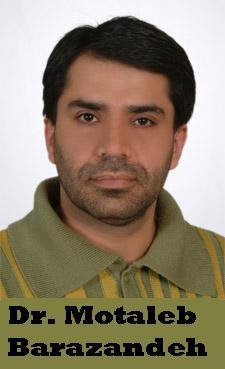
Dr. Motaleb Barazandeh (Ph.D)
This is Dr. Motaleb Barazandeh; Ph.D on Clinical Psychology, International Grand Master of Metaphysics, International Grand Master of Reiki and Faculty member of Universal Academy of Parapsychology ( UAP ) in Uk.
He is ready to ......
He is ready to ......
6- Reiki is:
6- Reiki is:
Reiki is one of paths to enlightenment.
Reiki is primarily perceived as a practice for healing the body, but it is also a method for healing the mind and spirit.
Reiki is a power to reunite the trinity of Mind – Body - Spirit in their optimal state of harmony.
Reiki is healing energy in its truest sense.
Reiki is a healing system that is a safe, natural and holistic way of treating many acute and chronic conditions and bringing about spiritual, mental and emotional well beings. These conditions include: stress, sinusitis, menstrual problems, cystitis, migraine, asthma, M. E. (chronic fatigue syndrome), eczema, arthritis, menopausal problems, back pain, anxiety, tension, depression, isomnia and sciatica.
Reiki is suitable for everyone, including the very young and the elderly, pregnant women and those recovering from surgery.
Reiki is not only a healing method – it also provides a method for developing yourself spiritually, although this aspect is often underemphasized.
Reiki is not just another therapy, although it is, without doubt, highly therapeutic. It offers itself as a spiritual discipline and pathway.
By: Dr Motaleb Barazandeh, faculty member of Universal Academy of Parapsychology
Reference: Mckenzie, Eleanor. (2006) Healing Reiki, London: Bounty Books Publications.
Reiki is one of paths to enlightenment.
Reiki is primarily perceived as a practice for healing the body, but it is also a method for healing the mind and spirit.
Reiki is a power to reunite the trinity of Mind – Body - Spirit in their optimal state of harmony.
Reiki is healing energy in its truest sense.
Reiki is a healing system that is a safe, natural and holistic way of treating many acute and chronic conditions and bringing about spiritual, mental and emotional well beings. These conditions include: stress, sinusitis, menstrual problems, cystitis, migraine, asthma, M. E. (chronic fatigue syndrome), eczema, arthritis, menopausal problems, back pain, anxiety, tension, depression, isomnia and sciatica.
Reiki is suitable for everyone, including the very young and the elderly, pregnant women and those recovering from surgery.
Reiki is not only a healing method – it also provides a method for developing yourself spiritually, although this aspect is often underemphasized.
Reiki is not just another therapy, although it is, without doubt, highly therapeutic. It offers itself as a spiritual discipline and pathway.
By: Dr Motaleb Barazandeh, faculty member of Universal Academy of Parapsychology
Reference: Mckenzie, Eleanor. (2006) Healing Reiki, London: Bounty Books Publications.
Universal Academy of Parapsychology
Universal Academy of Parapsychology
UAP Founded by an international group of educators and change agents, UAP is a non-traditional institution whose mission is to provide global, innovative and non-traditional learning opportunities.
UAP is a distance learning company that provides the most recent information and the highest quality of educational content and affordable distance courses in different fields of metaphysics for all people of all cultures.
UAP Founded by an international group of educators and change agents, UAP is a non-traditional institution whose mission is to provide global, innovative and non-traditional learning opportunities.
UAP is a distance learning company that provides the most recent information and the highest quality of educational content and affordable distance courses in different fields of metaphysics for all people of all cultures.
Wednesday, 16 May 2007
Yoga - Dr. Motaleb Barazandeh (Ph.D)
Yoga - 2
The word Yoga is an ancient Sanskrit for "union", which refers to the merging of the body, mind, and spirit. So Yoga, in general, is a spiritual practice or discipline that helps the individual unify his/her body, mind, and heart. Although many people know Yoga as a type of exercise system that stretches and strengthens the body through various poses known as asanas (postures), it is more than an exercise routine. The breathing techniques and relaxation release tension and stress, and teach you to relax and enjoy life. Deep Relaxation is traditionally the conclusion and culmination of every Yoga session. The meditation practice teaches to calm the mind and brings emotional balance. It also increases awareness of what is happening in your own body and mind. For example some of yogis can increase or decrease their heart beat at will. Finally it increases your awareness. If you stay with yoga long enough, you may discover a "spiritual awakening" Therefore not only does yoga increase circulation, improve flexibility and muscle tone or relieve chronic pain and alleviate anxiety-related disorders but also supports us in developing personal practices that cultivate a sense of light, harmony, health, and well-being.
Types of yoga:
There are many types of yoga. Amongst the most popular are:
Hatha Yoga: deals with physical postures and breathing.
Raja yoga: western kind of Yoga. It unites the physical, mental and spiritual aspects of the self. It is the most practical.
Karma Yoga: spiritual practice to help the individual unify body, mind, and heart through certain practices in one’s daily life.
Bhakti Yoga: a devotional form that includes chanting and worship practices.
Jnana yoga: the Yoga of knowledge, they find their peace through the study of scriptures.
Kundalini yoga: focuses on the release of internal energy, using postures, breathing and meditation.
Ashtanga Yoga: a fast flowing, aerobic yoga workout.
Iyengar Yoga: strong, precise style of yoga for the fitness conscious.
Vini yoga: a gentler style with emphasis on healing.
Satyananda yoga: a gentle style of traditional Hatha Yoga, suitable for all age and shape.
Bikram Yoga: a dynamic style of yoga, practiced in a heated room.
Who does Yoga?
Yoga benefits people of all ages, men and women. People young and old can gain many benefits from regular yoga practices, and asanas can be adjusted to fit physical limitations and other complications. If you want a break from treadmills or the pool etc, take a look at yoga. Not only are you striving towards physical well being, you are striving towards spiritual well being as well.
The word Yoga is an ancient Sanskrit for "union", which refers to the merging of the body, mind, and spirit. So Yoga, in general, is a spiritual practice or discipline that helps the individual unify his/her body, mind, and heart. Although many people know Yoga as a type of exercise system that stretches and strengthens the body through various poses known as asanas (postures), it is more than an exercise routine. The breathing techniques and relaxation release tension and stress, and teach you to relax and enjoy life. Deep Relaxation is traditionally the conclusion and culmination of every Yoga session. The meditation practice teaches to calm the mind and brings emotional balance. It also increases awareness of what is happening in your own body and mind. For example some of yogis can increase or decrease their heart beat at will. Finally it increases your awareness. If you stay with yoga long enough, you may discover a "spiritual awakening" Therefore not only does yoga increase circulation, improve flexibility and muscle tone or relieve chronic pain and alleviate anxiety-related disorders but also supports us in developing personal practices that cultivate a sense of light, harmony, health, and well-being.
Types of yoga:
There are many types of yoga. Amongst the most popular are:
Hatha Yoga: deals with physical postures and breathing.
Raja yoga: western kind of Yoga. It unites the physical, mental and spiritual aspects of the self. It is the most practical.
Karma Yoga: spiritual practice to help the individual unify body, mind, and heart through certain practices in one’s daily life.
Bhakti Yoga: a devotional form that includes chanting and worship practices.
Jnana yoga: the Yoga of knowledge, they find their peace through the study of scriptures.
Kundalini yoga: focuses on the release of internal energy, using postures, breathing and meditation.
Ashtanga Yoga: a fast flowing, aerobic yoga workout.
Iyengar Yoga: strong, precise style of yoga for the fitness conscious.
Vini yoga: a gentler style with emphasis on healing.
Satyananda yoga: a gentle style of traditional Hatha Yoga, suitable for all age and shape.
Bikram Yoga: a dynamic style of yoga, practiced in a heated room.
Who does Yoga?
Yoga benefits people of all ages, men and women. People young and old can gain many benefits from regular yoga practices, and asanas can be adjusted to fit physical limitations and other complications. If you want a break from treadmills or the pool etc, take a look at yoga. Not only are you striving towards physical well being, you are striving towards spiritual well being as well.
Parapsychology - Dr. Motaleb Barazandeh (Ph.D)
Parapsychology:
Parapsychology-Meaning "beside psychology," is a field of study concerned with the investigation of evidence for paranormal psychological phenomena (such as extrasensory perception, telepathy, clairvoyance, and psychokinesis). It is also known as psychical research. Scientists in this field, including the psychics who work daily in this field, know first hand that there are many, many details that go into maintaining a highly accurate database, and more often than not, it may take months, if not years or decades for all of the information to be obtained and founded accurately.
A long-held, common-sense assumption is that the worlds of the subjective and objective are completely distinct, with no overlap. Subjective is "here, in the head," and objective is "there, out in the world." Parapsychology is the study of phenomena suggesting that the strict subjective/objective dichotomy may instead be part of a spectrum, with some phenomena occasionally falling between purely subjective and purely objective. We call such phenomena "anomalous" because they are difficult to explain within current scientific models.
These anomalies fall into three general categories: ESP (terms are defined below), PK, and phenomena suggestive of survival after bodily death, including near-death experiences, apparitions, and reincarnation. Most parapsychologists today expect that further research will eventually explain these anomalies in scientific terms, although it is not clear whether they can be fully understood without significant (some might say revolutionary) expansions of the current state of scientific knowledge. Other researchers take the stance that existing scientific models of perception and memory are adequate to explain some or all parapsychological phenomena.
In spite of what the media often imply, parapsychology is not the study of "anything paranormal" or bizarre. Nor is parapsychology concerned with astrology, UFOs, searching for Bigfoot, paganism, vampires, alchemy, or witchcraft. In popular usage, the basic parapsychological phenomena are categorized as follows:
Telepathy: Direct mind-to-mind communication.
Precognition: Also called premonition. Obtaining information about future events, where the information could not be inferred through normal means. Many people report dreams that appear to be precognitive.
Clairvoyance: Sometimes called remote viewing; obtaining information about events at remote locations, beyond the reach of the normal senses.
ESP: Extra-sensory perception; a general term for obtaining information about events beyond the reach of the normal senses. This term subsumes telepathy, clairvoyance, and precognition.
Psychokinesis: Also called PK; direct mental interaction with physical objects, animate or inanimate.
Bio-PK: Direct mental interactions with living systems.
NDE: Near death experience; an experience reported by those who were revived from nearly dying. Often refers to a core experience that includes feelings of peace, OBE, seeing lights and other phenomena.
OBE: Out-of-body experience; the experience of feeling separated from the body, often accompanied by visual perceptions as though from above the body.
Reincarnation: The belief that we live successive lives, with primarily evidence coming from the apparent recollections of previous lives by very small children.
Haunting: Recurrent phenomena reported to occur in particular locations that include apparitions, sounds, movement of objects, and other effects.
Poltergeist: Large-scale PK phenomena often attributed to spirits, but which are now thought to be due to a living person, frequently an adolescent.
Psi: A neutral term for parapsychological phenomena. Psi, psychic, and psychical are synonyms.
Parapsychology employs a number of research methods in studying the possibility of psychical phenomena. Among these is the experimental approach. Psi phenomena have occurred in all cultures throughout history, they continue to occur, and some of the reported phenomena have been persuasively verified using scientific methods. Because psi seems to transcend the assumed limits of material functioning like BBNS(Brain, Body, and Nervous System), some interpret psi as supporting the idea that there is something more to mind than just the BBNS, that there is some sort of "soul," or the like.
Parapsychology is interesting mainly because of the implications. To list a few examples, psi phenomena suggest (a) that what science knows about the nature of universe is incomplete; (b) that the presumed capabilities and limitations of human potential have been underestimated; (c) that fundamental assumptions and philosophical beliefs about the separation of mind and body may be incorrect; and (d) that religious assumptions about the divine nature of "miracles" may have been mistaken.
Physicists tend to be interested in parapsychology because of the implication that we have a gross misunderstanding about space and time and the transmission of energy and information.
Biologists are interested because psi implies the existence of additional, unexplained methods of sensing the world.
Psychologists are interested for what psi implies about the nature of perception and memory.
Philosophers are interested because psi phenomena specifically address many age-old philosophical problems, including the role of the mind in the physical world, and the nature of the objective vs. the subjective.
Theologians and the general public tend to be interested because personal psi experiences are often accompanied by feelings of profound, ineffable meaning. As a result, psi is thought by some to have "spiritual" implications.
Parapsychology-Meaning "beside psychology," is a field of study concerned with the investigation of evidence for paranormal psychological phenomena (such as extrasensory perception, telepathy, clairvoyance, and psychokinesis). It is also known as psychical research. Scientists in this field, including the psychics who work daily in this field, know first hand that there are many, many details that go into maintaining a highly accurate database, and more often than not, it may take months, if not years or decades for all of the information to be obtained and founded accurately.
A long-held, common-sense assumption is that the worlds of the subjective and objective are completely distinct, with no overlap. Subjective is "here, in the head," and objective is "there, out in the world." Parapsychology is the study of phenomena suggesting that the strict subjective/objective dichotomy may instead be part of a spectrum, with some phenomena occasionally falling between purely subjective and purely objective. We call such phenomena "anomalous" because they are difficult to explain within current scientific models.
These anomalies fall into three general categories: ESP (terms are defined below), PK, and phenomena suggestive of survival after bodily death, including near-death experiences, apparitions, and reincarnation. Most parapsychologists today expect that further research will eventually explain these anomalies in scientific terms, although it is not clear whether they can be fully understood without significant (some might say revolutionary) expansions of the current state of scientific knowledge. Other researchers take the stance that existing scientific models of perception and memory are adequate to explain some or all parapsychological phenomena.
In spite of what the media often imply, parapsychology is not the study of "anything paranormal" or bizarre. Nor is parapsychology concerned with astrology, UFOs, searching for Bigfoot, paganism, vampires, alchemy, or witchcraft. In popular usage, the basic parapsychological phenomena are categorized as follows:
Telepathy: Direct mind-to-mind communication.
Precognition: Also called premonition. Obtaining information about future events, where the information could not be inferred through normal means. Many people report dreams that appear to be precognitive.
Clairvoyance: Sometimes called remote viewing; obtaining information about events at remote locations, beyond the reach of the normal senses.
ESP: Extra-sensory perception; a general term for obtaining information about events beyond the reach of the normal senses. This term subsumes telepathy, clairvoyance, and precognition.
Psychokinesis: Also called PK; direct mental interaction with physical objects, animate or inanimate.
Bio-PK: Direct mental interactions with living systems.
NDE: Near death experience; an experience reported by those who were revived from nearly dying. Often refers to a core experience that includes feelings of peace, OBE, seeing lights and other phenomena.
OBE: Out-of-body experience; the experience of feeling separated from the body, often accompanied by visual perceptions as though from above the body.
Reincarnation: The belief that we live successive lives, with primarily evidence coming from the apparent recollections of previous lives by very small children.
Haunting: Recurrent phenomena reported to occur in particular locations that include apparitions, sounds, movement of objects, and other effects.
Poltergeist: Large-scale PK phenomena often attributed to spirits, but which are now thought to be due to a living person, frequently an adolescent.
Psi: A neutral term for parapsychological phenomena. Psi, psychic, and psychical are synonyms.
Parapsychology employs a number of research methods in studying the possibility of psychical phenomena. Among these is the experimental approach. Psi phenomena have occurred in all cultures throughout history, they continue to occur, and some of the reported phenomena have been persuasively verified using scientific methods. Because psi seems to transcend the assumed limits of material functioning like BBNS(Brain, Body, and Nervous System), some interpret psi as supporting the idea that there is something more to mind than just the BBNS, that there is some sort of "soul," or the like.
Parapsychology is interesting mainly because of the implications. To list a few examples, psi phenomena suggest (a) that what science knows about the nature of universe is incomplete; (b) that the presumed capabilities and limitations of human potential have been underestimated; (c) that fundamental assumptions and philosophical beliefs about the separation of mind and body may be incorrect; and (d) that religious assumptions about the divine nature of "miracles" may have been mistaken.
Physicists tend to be interested in parapsychology because of the implication that we have a gross misunderstanding about space and time and the transmission of energy and information.
Biologists are interested because psi implies the existence of additional, unexplained methods of sensing the world.
Psychologists are interested for what psi implies about the nature of perception and memory.
Philosophers are interested because psi phenomena specifically address many age-old philosophical problems, including the role of the mind in the physical world, and the nature of the objective vs. the subjective.
Theologians and the general public tend to be interested because personal psi experiences are often accompanied by feelings of profound, ineffable meaning. As a result, psi is thought by some to have "spiritual" implications.
Friday, 6 April 2007
YOGA AND KNOWLEDGE

Knowledge, one of human being’s evolutionary stages, can be attained in believers after abundant devotions and asceticism. Knowledge is the light of the heart and a sign of virtue and faith. Those without knowledge have hearts that are dark and empty of the light of faith. Knowledge along with worship and analysis are considered as the most important goals of creation. Thus, each disciple is required to learn the essential knowledge from masters and also show it in action.
With more than five thousand years of antecedence, yoga is one of the most ancient way of acquiring knowledge for it gives a deep understanding of human nature. Yoga is one of the best ways of attaining relaxation, controlling feelings, having concentration, doing meditation, reaching Samadhi and at the end, a practical experience of self-realization. This ancient knowledge evens up the path to reality by purifying self and giving a direct recognition of the depth of human nature.
The most important elements of knowledge are: knowing oneself and God. Self-realization is the ultimate stage of knowledge, which leads to knowing God. Masters have claimed that self-realization is the most profitable of all knowledge. Therefore, self-realization is the best wisdom and the most profitable knowledge. And the most naïve people are the ones who do not know themselves. Yoga attributes the most important reason of human suffering to ignorance about his real nature.
A human being is composed of three parts: body, soul, and spirit. “Spirit”, the central core and the main essence of human being, has originated from God and will also return to Him. “Body” is a means that is in our authority during the short time of living in the physical world; and is nothing more than a honesty.”Soul” is a part between body and spirit. There is a great difference between the nature of body and spirit. Body is terrestrial and spirit is celestial. As a result of these contrasts, they can not be easily united unless a third element which is the soul and that functions as a connector joins them. Some believe that, soul is the result of the dual relationship between body and spirit.
Yoga believes that human being is an abstract and single spirit, which has been separated from its cosmic source (God); also, the origin of all human sufferings is this separation, and reuniting with this cosmic source will only relieve these pains. Yoga can offer a suitable device for this reunion. Furthermore, the unity of body and the metaphysical aspects of human being is one of the aims of techniques in yoga. Even the word yoga has roots in this important issue, for yoga means unity and becoming one.
It is assumed that the self-realization that results in theology is knowing the spirit. Since knowing God completely is impossible, spirit has qualities that help us in knowing the Unique Creator. Perhaps, the best conclusion we can get from deep thinking in the subject matter of theology is to understand that we are unable to know God. But a touch of the depth of the nature of spirit is according to the following:
Spirit can not be sensed with the five senses and contacted through materialistic means. For example, we can not see or touch the spirit or communicate with it through telephone. In the same way, the omniscient God can not be sensed by the five senses and touched by materialistic means. The spirit is unique in the body, and does not have a special position although the signs of its presence are obvious in the whole universe, and despite not having any special location He is present every where. Spirit has the ability to stimulate and rule the body; the ability to stimulate and rule the world is also within God’s authority. Spirit is conscious of the body but body is unable to know the spirit; also, the omniscient God, has complete awareness of the whole universe but the creatures are unable to know Him. Spirit has existed before the creation of the body and will also exist after its death. God is also eternal.
Masters have stated that knowing oneself results in knowing God, disagreement with self results in agreement with God, dissatisfaction of self leads to satisfaction of God, abandoning self results in becoming close to God. Also, disobeying the desires of self leads to obeying God, becoming far from self causes nearness to God, turning away from self leads to having friendship with God, and for turning away from self, we should get help from God.
Knowing the honorable God is the highest level of knowledge and also a factor in the completion of knowledge. Knowing God causes love for Him, wanting nothing from people, letting go of the world, going beyond paradox and reaching unity. Theology is the power of the helpless, the light of any darkness and the cure of the sick.
There are three ways to know God. First, knowing Him through the signs in nature, which is done by common people; by learning about nature they get to know God. Second, knowing Him through the signs in oneself (self-realization) which is done by chosen people; they get to know God through their hearts. Knowing God through the signs in oneself is more beneficial for it is accompanied by the reform of one’s characteristics and deeds. The third way of knowing God is through vision, which is the way of saints and masters and not all can get to this knowledge. From another point of view, people can get to the knowledge of God in three ways. First, knowing God by means of senses and tangible issues. Second, by intellect and logical reasoning, and third, through inner revelation.
A person who acquires all the knowledge is called a Gnostic. Literally, Gnostic means learned, aware, and having insight into secrets. A Gnostic has reached self-realization and is involved in purifying oneself; he has reached piety and is moving towards God. He is always seeking knowledge and faith; he considers knowledge and faith the wings for flying towards God. The other features of Gnostics are: chastity, devoutness, purity, moderation, humbleness, and beneficence. Features like cruelty, lying, calumny, greed, and passion can not be found in Gnostics. In yoga, yama and nyama prepares human beings for reaching these levels. Asana and pranayama are also important means in this path, but the important part of reaching the above mentioned levels becomes possible through pratyahara, dharana, and dhyana and the ultimate stage is Samadhi.
With all the above mentioned importance of knowledge, we should ask ourselves, “Are we seeking for knowledge? Have we who claim to be in the path of development reached self-realization and theology? To what extent have we practically used knowledge? Have we found the real Gnostic to help us in this way? Have we gained a deep understanding of the truth of yoga?”
Saturday, 24 March 2007
Benefits and Applications of Reiki - 1

Benefits and Applications of Reiki - 1
By: Dr. Motaleb Barazandeh (Ph.D);
Metaphysician and Parapsychologist
Hello my friends.
I am Dr. Motaleb Barazandeh (Ph.D). I am Reiki Master/Teacher.
Do you know anything about Benefits and Applications of Reiki ?
Please study this viewpoints:
1- Reiki amplifies and balances the body's energies and the energy levels.
2- Reiki creates deep relaxation and aids the body to release stress and tension.
3- Reiki brings the body into harmony by releasing physical and emotional blockages.
4- Reiki removes energy blockages and adjusts the energy flow of the endocrine system.
5- Reiki releases blocked energies.
6- Reiki balances the organs and glands and their bodily functions.
7- Reiki raises the vibrational frequency of the body.
8- Reiki heals holistically.
9- Reiki supports conventional medicine.
10- Reiki treats acute or chronic conditions.
11- Reiki stimulates the natural healing of acute & chronic ailments.
12- Reiki can help with acute and chronic problems and aides the breaking of addictions.
13- Reiki reduces some of the side effects of drugs or decreases of medication side-effects.
14- Reiki helps the body to recover from drug therapy after surgery and chemotherapy.
15- Reiki speeds recovery after surgery, injury or illness.
16- Reiki reduces, relieves, removes or releases pains and aches.
17- Reiki supports the body's natural ability to heal itself.
18- Reiki accelerates the bodie's self-healing abilities.
19- Reiki strengthens and supports the immune system allowing the body to fight off illness.
20- Reiki cleanses the toxins of body or assists the body in cleaning itself from toxins.
21- Reiki reduces blood pressure.
22- Reiki treats symptoms and causes of illnesses.
References: different books and articles by reiki masters
Dr. Motaleb Barazandeh (Ph.D); Clinical Psyhologist
My Email is: Dr.Barazandeh@yahoo.com
What is Reiki ?

What is Reiki ?
By: Dr. Motaleb Barazandeh (Ph.D);
Metaphysician and Parapsychologist
Hello my friends.
I am Dr. Motaleb Barazandeh (Ph.D). I am Reiki Master/Teacher.
Do you know anything about Reiki ?
Please study this viewpoints:
1- Reiki is a kind of ENERGY, namely “universal life energy”.
2- Reiki is a Japanese word meaning Universal Life Force Energy (ULFE).
3- Reiki is an ancient Japanese hands-on healing modality based on the transference of vital energy.
4- Reiki is a generic word in Japan, and is used to describe many types of healing and spiritual work.
5- Reiki is a precise, ancient Tibetan system of healing, harmonizing and balancing energy.
6- Reiki is a meditation technique.
7- Reiki is just one of paths to spirituality. It is a perfect self-help system.
8- Reiki is one of the many forms of bodywork now available.
9- Reiki is an alternative new-age healing art.
10- Reiki is the energy that pervades everything sentient and insentient.
11- Reiki is a complete system of healing that transforms and heals the body and mind.
12- Reiki energy is the healing energy of the Universe. It represents a matrix of non-dualistic energy, which permeates all things.
13- Reiki works on many levels, including the physical, mental, emotional and spiritual.
14- Reiki is an excellent technique for stress management, as well as being a complementary treatment to western allopathic medicine.
References: different books and articles by reiki masters
Dr. Motaleb Barazandeh (Ph.D); Clinical Psyhologist
Email: Dr.Barazandeh@yahoo.com
Asceticism - Dr Motaleb Barazandeh

Asceticism
By: Dr. Motaleb Barazandeh (Ph.D);
Metaphysician and Parapsychologist
Literally, asceticism means abstemiousness, and turning away from the world. From the Gnostic’s point of view, it means abandoning what is permitted for the fear of being taken into account and abandoning what is forbidden for the fear of punishment. In other words, the state of not being happy for the sake of gaining worldly matters and not feeling disappointed for the sake of losing them is called asceticism. The basics of asceticism is turning back to the world and facing the Futurity. So it is first necessary to know the world in order to abandon it with awareness. We know the world with the four elements ruling it which are: time, place, energy, and substance.
The world and whatever that is in it are tools for getting to Futurity. Therefore, Ali (PBUH) has said, “The world is a tool or a vehicle for the believer to take him to his Lord, so fix your vehicles so that they would take you to your Lord. The world is in fact like a bridge, which is used for passing from Zar to Futurity. It is a farm for Futurity, a companion for it and a wonderful vehicle for the aware. Ali (PBUH) says: “ This world is a place to leave and futurity is a place to remain, so let’s gather provisions for our permanent destination.”
The world is the lowest level in the whole universe. Ali (PBUH) said: “ The world has been giving this name because of its being the lowest thing and Futurity has been given this name for rewarding is there.” Being mortal and transient are also the other features of the world. Therefore, Adam (PBUH) told his son, Sheys, “ Do not become attached to the mortal world, because I have been attached to the eternal Heaven, but it was not loyal to me and I was sent out of it.”
The world is like a pleasant toy; full of darkness, mortal, cursed, and deceitful. In the valuable book of “Mizan-ol-Hekmat”, it has been quoted from Ali (PBUH) that, “ The prophets and the chosens have detached themselves from the world… and when pious men went after it… they saw the world like a corpse that eating from it can only be allowed in cases of need. And they ate from it as much as they could be alive and not die; and saw the world like a smelly corpse that whoever passed it by, held his nose and mouth (because of the bad smell). They had the least nourishment from the world. My brothers! I swear to God that this world, both in this world and futurity for the one who purifies his thoughts is more fetid than a corpse, but the one whose job is tannying skins is like a person who passes by the corpse or sits beside it but is not bothered by the bad smell.
The world is the origin of ever lasting sorrows, the enemy of the Futurity and the desire of the unfortunate people. This world is charming, sweet, decent, green, and colorful, but it’s a prison. Ali (PBUH) says: “The world is like a snake, when touching it, it is soft; but inside it is filled with poison. So the deceived and the naïve become interested in it and the aware and the wise escape from it”. This world is a place of poverty and emptiness and baseness. This is why “God has not chosen it for his believers and has not been stingy in giving it to his enemies. Its welfare is so little and its evil is always ready.”
Loving the world is the origin of all sins and the cause of getting far from the merciful God. Ali (PBUH) says: “In the same way that day and night can not be put together, the love for God and the love for the world can not be put together either.” Loving the world causes the destruction of the wisdom and the blindness of the heart. Loving the world is an ever-lasting sorrow, an unreachable desire, and an unreachable hope, which makes human beings blind, deaf, dumb, and inferior. Ali’s speech gives us a proof in this matter: “Let go of the world that loving the world makes people blind, deaf, and inferior.” Insolence, greed, hypocrisy, egotism, and passion are the negative features that the world gives the ones who love it. In a beautiful Hadis, Imam Sadegh (PBUH) says: “ The world is like a body whose head is insolence; its are eyes greed; its ears are covetousness; its tongue is hypocrisy, its hands are passion; its legs are egotism; its heart is negligence; its color is destruction; and its result is mortality.
So the one who loves it will become a snob; the one who considers it good will have greed. The one who searches for it will have covetousness; the one who admires it will have hypocrisy. The one who wants it will become selfish; the one who depends on it will become neglectful. The one who is attracted to it will get into trouble and lose it; and the one who gathers things and is not generous will be in fire which is his place.”
The physical world, is the world of contradictions because here things are in contrast with each other. For example: light versus darkness, good versus bad, beautiful versus ugly, up versus down…. And for ascending to the upper world one should pass these contradictions. Ali (PBUH) said: “Before your bodies get out of this world, take your hearts out of it, because you are tested here for you are not created for any thing except that.”
The world is a tool and not an aim, so all our attention should be to the aim. Attention should be paid to not covering the end with the tool and not being disappointed for losing the tool. Ali (PBUH) saw Jaber-ebne-Abdollah sighing. Ali (PBUH) said, “Dear Jaber! Are you sighting for the world?” Jaber said, “Yes.” He replied, “Jaber! The pleasures of the world are seven: The eatable, the drinkable, the wearable, the sexual, riding, smelling, and hearing. The most delicious eatable is honey, which is from the mouth of a bee. The most pleasant drinkable is water which flows on soil. The best wearable is silk which is from the mouth of a worm. The best bedfellows are women, which results in sexual intercourse and the union of two similar organs; the most beautiful thing in a woman, sexual pleasure, is wanted from her lowest organ. The best thing to ride on is a horse, which can be killing. The most valuable thing to smell is musk, which is taken from the blood of the navel of an animal. The best thing for listening to is music, which is also sinful. So a wise person never sighs for such things.” Jaber said: “I swear to God that since that time I never thought of the world.”
For rescuing oneself from the world, human beings should have virtue and by trusting God, try in abandoning it. Loghman (PBUH) in advising his son said, “My son! The world is a deep sea in which many people have died, so make faith your ship in this sea, and trusting God its sails, and piety your food. If you survive, it is because of God’s mercy and if you drown, it is because of your own sins.
For rescuing oneself from the world and its consequences, human beings should vaccinate themselves with asceticism. Perhaps it is for this reason that Masters have admired asceticism and ascetics. They believe asceticism is the root, fruit, and the supporter of religion. Gratitude of Gods’ gifts, patience at the time of misfortune, and letting go of whatever keeps one away from God are the other qualities of asceticism. Imam Sadegh (PBUH) said, “Asceticism is the key to the Futurity and the exemption from fire. Asceticism is letting go of whatever keeps you away from God without regretting for not having it; and not becoming proud for leaving it and not hoping for any reward from it and not expecting any admiration in return for this job; and not wanting any compensation for it. But considering losing it a cause for calmness and having it a calamity for oneself and always escaping from calamity and attaching oneself to comfort.”
An ascetic feels sorrow for being alive and eager to go to the Futurity and meeting his Lord. The death of the body is not important for him but the death of his heart is important and cares about it. His body is in the world but his heart is in the Futurity. Ali (PBUH) in describing asceticism says, “There were some people in the world that didn’t know what the world was, they lived in it as if they weren’t in it. They lived based on their insight and tried to precede one another in the things they were to do.
In concluding our discussion I would like to use a beautiful extract from the valuable book of “The Gnostic and Literary Interpretation of the Holy Koran”: “Whatever comes in the way of the subjects causing corruption should be avoided and they are four: The world, people, self, and the Devil. The world is like the supplies and you are like a passenger on a ship. If you take too much with you, your ship will sink and you’ll die. If you want to get away from the world’s misery you should know that the ones who took little were salvaged and the ones who took a lot drowned. The second is people; unless you are driven away from God, you won’t go to people. The ones who become calm with people will be far away from God. Loving the people and God can not be put together. Third, it is the self that causes all melancholy and is the base of all disturbances. If you are lucky enough to win in the fight against self, you’ll be salvaged. The fourth is the Devil to whom God told to go and have a share with people in their wealth and children. But not all hearts can be a place for the Devil the real heart is the Haram for the Lord and the Devil can not get close to it for it will burn.
It would be so good if we could be like Ali (PBUH) and say: “Oh world! Go and deceive someone else for I have abandoned you completely”. But what a pity that, practically, we have abandoned the Futurity!
References: Barazandeh, Motaleb. (2006) Higher Knowledge, Tehran: Jangal Publications.
Dr. Motaleb Barazandeh (Ph.D);
Metaphysician and Parapsychologist
Email: Dr.Barazandeh@yahoo.com
Theology - Dr Motaleb barazandeh

Theology
By: Dr. Motaleb Barazandeh (Ph.D);
Metaphysician and Parapsychologist
Knowledge, one of human being’s evolutionary stages, can be attained in believers after abundant devotions and asceticism. Knowledge is the light of the heart and a sign of virtue and faith. Those without knowledge have hearts that are dark and empty of the light of faith. The prophet Mohammad (PBUH) said, “ Knowledge is my capital, wisdom is the root of my religion, love is my tool, desire is my horse, and the remembrance of the glorious God is my companion.” Thus each disciple is required to learn the essential knowledge from the masters and also show it in action. The most important elements of knowledge consist of self-realization, Theology, knowing the holy prophet, the world, Futurity, death and Devil. When knowledge is attained, its signs also start to appear. The holy Ali (PBUH), the Lord of Gnostics, said, “The one who recognizes God becomes lonely. The one who recognizes himself becomes single. The one who recognizes the world abandons it; and the one who recognizes people chooses solitude”.
The person who acquires all the necessary knowledge is called a Gnostic (all people do not reach to this level). In the valuable book of “The Literary and Gnosis Interpretation of the Holy Koran”, it has been quoted from the Gnostics that: “The essence of knowledge consists of seclusion from people, having privacy with God, invocation, insight; sometimes being in reverence of the glory of God; and sometimes meditating with the hope of God’s kindness.
Self-realization: Self-realization is the ultimate stage of knowledge, which leads to knowing God. Masters have claimed that self-realization is the most profitable of all knowledge. Therefore, self-realization is the best wisdom and the most profitable knowledge. And the most naïve people are the ones who do not know themselves.
A human being is composed of three parts: body, soul, and spirit. “Spirit”, the central core and the main essence of human being, has originated from God and will also return to Him. “Body” is a means that is in our authority during the short time of living in the physical world; and is nothing more than a gift. “Soul” is a part between body and spirit. There is a great difference between the nature of the body and spirit. Body is terrestrial and spirit is celestial. As a result of these contrasts, they can not be easily united unless a third element which is the soul and that functions as a connector joins them. Some believe that, soul is the result of the dual relationship between body and spirit.
It is assumed that the self-realization that results in theology is knowing the spirit. Since knowing God completely is impossible, spirit has qualities that help us in knowing the Unique Creator; for knowing God completely is an impossible issue. Perhaps the best conclusion we can get from insight in the subject matter of Theology is to understand that we are unable to know God.
Spirit can not be sensed with the five senses and contacted through materialistic means. For example, we can not see or touch the spirit or communicate with it through telephone. In the same way, the omniscient God can not be sensed by the five senses and touched by materialistic means. The spirit is unique in the body, and does not have a special position although the signs of its presence are obvious in the whole body. The eternal God is also unique in the universe. Despite not having any special location, He is present every where. Spirit has the ability to stimulate and rule the body; the abilityto stimulate and rule the world is also within God’s authority. Spirit is conscious of the body but body is unable to know the spirit; also, the omniscient God, has complete awareness of the whole universe but the creatures are unable to know Him. Spirit has existed before the creation of the body and will also exist after its death. God is also eternal.
Imam Sadegh (PBUH), the founder of the first university of Theology said, “The self-realization of human beings is to know oneself by four natures, four pillars, and four elements. The four natures are: blood, bile, wind, and phlegm. The pillars are wisdom from which understanding and memory originate. The elements are light, fire, spirit, and water”.
Theology: Knowing the honorable God is the highest level of knowledge and also a factor in the completion of knowledge. Knowing God causes love for Him, wanting nothing from people, letting go of the world. The one who knows God will not be lonely although it only seems like he is far from people; for knowing God is the companion of any lonesome and the supporter of any lonely person.
Theology is the power of the helpless, the light of any darkness and the cure of the sick. The one who succeeds in knowing God will spend days fasting and nights worshipping Him. The other blessings gained are: controlling one’s tongue and stomach and being safe from the many calamities and their consequences.
God should be known through God. Knowing him through other means also originates from Him. Sheykh Sadoogh said, “If we know Him through our wisdom, this wisdom is a Divine gift. If we know Him by means of His prophets and reasons, it is the glorious God who has chosen them and sent them to us as His mercy and grace. If we know Him by means of self-realization, our selves are God’s creation, therefore in any way we have known God through God”.\
Perhaps some have thought that if they had died in childhood and before coming to age, they would go straight to Heaven and didn’t need to tolerate all the burdens and difficulties in the world. Ali (PBUH), the lord of virtuous, said, “I do not like dying in childhood and going to Heaven while I have not known my Lord”.
There are three ways to know God. First, knowing Him through the signs in nature, which is done by common people; by learning about nature, they get to know God. Second, knowing Him through the signs in oneself (self-realization) which is done by chosen people; they get to know God through their hearts. Knowing God through the signs in oneself is more beneficial for it is accompanied by the reform of one’s characteristics and deeds. The third way of knowing God is through vision, which is the way of saints and masters and not all can get to this knowledge. From another point of view, people can get to the knowledge of God in three ways. First, knowing God by means of senses and tangible issues. Second, by intellect and logical reasoning, and third, through inner revelation.
Masters have stated that knowing oneself results in knowing God. Disagreement with self results in agreement with God. Dissatisfaction of self leads to satisfaction of God. Abandoning self results in becoming close to God. Also, disobeying the desires of self leads to obeying God. Becoming far from self causes nearness to God. Turning away from self leads to having friendship with God, and for turning away from self, we should get help from God.
With all the above mentioned importance of self realization and Theology, we, the ones who claim to be in the path of evolution, should ask ourselves: How much of the necessary knowledge have we learned? How successful have we been in achieving knowledge? Have we gathered the necessary knowledge for being in this path? Are we one of those who wish they had died at childhood and had gone to Heaven? Or are we the ones who like to grow so that they could reach Theology?
References: Barazandeh, Motaleb. (2006) Higher Knowledge, Tehran: Jangal Publications.
Dr. Motaleb Barazandeh (Ph.D);
Metaphysician and Parapsychologist
Friday, 16 March 2007
Dr M Barazandeh

Hello. I am Dr Motaleb Barazandeh. I am Metaphysician, Parapsychologist, Hypnotherapist, Reikitherapist and Reiki Master/Teacher. I have Ph.D in Clinical Psychologist. I like be friend with everybody, and I like help to everybody.
Do you like be friend with me ?
My email is: Dr.Barazandeh@yahoo.com
Subscribe to:
Posts (Atom)