Showing posts with label parapsychology. Show all posts
Showing posts with label parapsychology. Show all posts
Tuesday, 22 May 2007

Universal Academy of Parapsychology - 2
Aims
Our Goal is to be one of the most ‘prestigious' academies for distance learning. With our intentions we realistically foresee ourselves to be the top UK metaphysical courses providers. The Academy promotes research and public studying into parapsychological phenomena.
The UAP advocates use of the scientific method. Psychic experiences should be studied in the same way as other human experiences. Evidence should be evaluated accurately and compassionately.
UAP Works within the private sector and is an independent standing self regulating professional teaching course.
We are a VAT Registered Limited Company, Registered in England. Company Number:05984436. We are not partners in business or associated in any way to any 'other' organization/s or political group/s other than in the cases of Memberships and Affiliation and so on to other professional bodies.
UAP Ltd. is a distance learning Academy that develops International certificates and diploma qualifications in the field of Metaphysics and Parapsychology. Therefore the student can study on his or her own schedule rather than a schedule set by a university.
UAP is not under ownership of any religious or metaphysical organization and is non-denominational. Students from any faith or creed or none are welcome. UAP is truly international in scope and does not restrict itself to the outmoded or arbitrary educational norms of any one country. Administration is co-ordinated partly from the United Kingdom and partly from overseas, and tutors may be located in any country where adjunct faculty reside. UAP is a class of institution that is increasingly prominent and accepted all over the world.
UAP has made its program affordable for people of all walks of life, keeping tuition prices low, and creating payment plans for every budget. It gives us great pleasure to be instrumental in enriching the professional and personal development of students all over the world.
Our Goal is to be one of the most ‘prestigious' academies for distance learning. With our intentions we realistically foresee ourselves to be the top UK metaphysical courses providers. The Academy promotes research and public studying into parapsychological phenomena.
The UAP advocates use of the scientific method. Psychic experiences should be studied in the same way as other human experiences. Evidence should be evaluated accurately and compassionately.
UAP Works within the private sector and is an independent standing self regulating professional teaching course.
We are a VAT Registered Limited Company, Registered in England. Company Number:05984436. We are not partners in business or associated in any way to any 'other' organization/s or political group/s other than in the cases of Memberships and Affiliation and so on to other professional bodies.
UAP Ltd. is a distance learning Academy that develops International certificates and diploma qualifications in the field of Metaphysics and Parapsychology. Therefore the student can study on his or her own schedule rather than a schedule set by a university.
UAP is not under ownership of any religious or metaphysical organization and is non-denominational. Students from any faith or creed or none are welcome. UAP is truly international in scope and does not restrict itself to the outmoded or arbitrary educational norms of any one country. Administration is co-ordinated partly from the United Kingdom and partly from overseas, and tutors may be located in any country where adjunct faculty reside. UAP is a class of institution that is increasingly prominent and accepted all over the world.
UAP has made its program affordable for people of all walks of life, keeping tuition prices low, and creating payment plans for every budget. It gives us great pleasure to be instrumental in enriching the professional and personal development of students all over the world.
Universal Academy of Parapsychology - 1
Our Vision
Our vision is to facilitate distance learning for people who seek to transform their lives. Our teachers create a caring and supporting environment for students on the path to enlightenment.
Our vision is to facilitate distance learning for people who seek to transform their lives. Our teachers create a caring and supporting environment for students on the path to enlightenment.
Wednesday, 16 May 2007
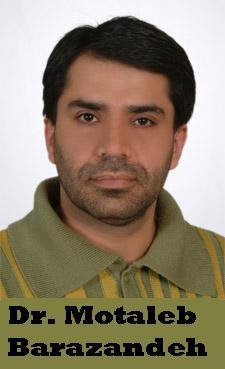
Parapsychology - Dr. Motaleb Barazandeh (Ph.D)
Parapsychology:
Parapsychology-Meaning "beside psychology," is a field of study concerned with the investigation of evidence for paranormal psychological phenomena (such as extrasensory perception, telepathy, clairvoyance, and psychokinesis). It is also known as psychical research. Scientists in this field, including the psychics who work daily in this field, know first hand that there are many, many details that go into maintaining a highly accurate database, and more often than not, it may take months, if not years or decades for all of the information to be obtained and founded accurately.
A long-held, common-sense assumption is that the worlds of the subjective and objective are completely distinct, with no overlap. Subjective is "here, in the head," and objective is "there, out in the world." Parapsychology is the study of phenomena suggesting that the strict subjective/objective dichotomy may instead be part of a spectrum, with some phenomena occasionally falling between purely subjective and purely objective. We call such phenomena "anomalous" because they are difficult to explain within current scientific models.
These anomalies fall into three general categories: ESP (terms are defined below), PK, and phenomena suggestive of survival after bodily death, including near-death experiences, apparitions, and reincarnation. Most parapsychologists today expect that further research will eventually explain these anomalies in scientific terms, although it is not clear whether they can be fully understood without significant (some might say revolutionary) expansions of the current state of scientific knowledge. Other researchers take the stance that existing scientific models of perception and memory are adequate to explain some or all parapsychological phenomena.
In spite of what the media often imply, parapsychology is not the study of "anything paranormal" or bizarre. Nor is parapsychology concerned with astrology, UFOs, searching for Bigfoot, paganism, vampires, alchemy, or witchcraft. In popular usage, the basic parapsychological phenomena are categorized as follows:
Telepathy: Direct mind-to-mind communication.
Precognition: Also called premonition. Obtaining information about future events, where the information could not be inferred through normal means. Many people report dreams that appear to be precognitive.
Clairvoyance: Sometimes called remote viewing; obtaining information about events at remote locations, beyond the reach of the normal senses.
ESP: Extra-sensory perception; a general term for obtaining information about events beyond the reach of the normal senses. This term subsumes telepathy, clairvoyance, and precognition.
Psychokinesis: Also called PK; direct mental interaction with physical objects, animate or inanimate.
Bio-PK: Direct mental interactions with living systems.
NDE: Near death experience; an experience reported by those who were revived from nearly dying. Often refers to a core experience that includes feelings of peace, OBE, seeing lights and other phenomena.
OBE: Out-of-body experience; the experience of feeling separated from the body, often accompanied by visual perceptions as though from above the body.
Reincarnation: The belief that we live successive lives, with primarily evidence coming from the apparent recollections of previous lives by very small children.
Haunting: Recurrent phenomena reported to occur in particular locations that include apparitions, sounds, movement of objects, and other effects.
Poltergeist: Large-scale PK phenomena often attributed to spirits, but which are now thought to be due to a living person, frequently an adolescent.
Psi: A neutral term for parapsychological phenomena. Psi, psychic, and psychical are synonyms.
Parapsychology employs a number of research methods in studying the possibility of psychical phenomena. Among these is the experimental approach. Psi phenomena have occurred in all cultures throughout history, they continue to occur, and some of the reported phenomena have been persuasively verified using scientific methods. Because psi seems to transcend the assumed limits of material functioning like BBNS(Brain, Body, and Nervous System), some interpret psi as supporting the idea that there is something more to mind than just the BBNS, that there is some sort of "soul," or the like.
Parapsychology is interesting mainly because of the implications. To list a few examples, psi phenomena suggest (a) that what science knows about the nature of universe is incomplete; (b) that the presumed capabilities and limitations of human potential have been underestimated; (c) that fundamental assumptions and philosophical beliefs about the separation of mind and body may be incorrect; and (d) that religious assumptions about the divine nature of "miracles" may have been mistaken.
Physicists tend to be interested in parapsychology because of the implication that we have a gross misunderstanding about space and time and the transmission of energy and information.
Biologists are interested because psi implies the existence of additional, unexplained methods of sensing the world.
Psychologists are interested for what psi implies about the nature of perception and memory.
Philosophers are interested because psi phenomena specifically address many age-old philosophical problems, including the role of the mind in the physical world, and the nature of the objective vs. the subjective.
Theologians and the general public tend to be interested because personal psi experiences are often accompanied by feelings of profound, ineffable meaning. As a result, psi is thought by some to have "spiritual" implications.
Parapsychology-Meaning "beside psychology," is a field of study concerned with the investigation of evidence for paranormal psychological phenomena (such as extrasensory perception, telepathy, clairvoyance, and psychokinesis). It is also known as psychical research. Scientists in this field, including the psychics who work daily in this field, know first hand that there are many, many details that go into maintaining a highly accurate database, and more often than not, it may take months, if not years or decades for all of the information to be obtained and founded accurately.
A long-held, common-sense assumption is that the worlds of the subjective and objective are completely distinct, with no overlap. Subjective is "here, in the head," and objective is "there, out in the world." Parapsychology is the study of phenomena suggesting that the strict subjective/objective dichotomy may instead be part of a spectrum, with some phenomena occasionally falling between purely subjective and purely objective. We call such phenomena "anomalous" because they are difficult to explain within current scientific models.
These anomalies fall into three general categories: ESP (terms are defined below), PK, and phenomena suggestive of survival after bodily death, including near-death experiences, apparitions, and reincarnation. Most parapsychologists today expect that further research will eventually explain these anomalies in scientific terms, although it is not clear whether they can be fully understood without significant (some might say revolutionary) expansions of the current state of scientific knowledge. Other researchers take the stance that existing scientific models of perception and memory are adequate to explain some or all parapsychological phenomena.
In spite of what the media often imply, parapsychology is not the study of "anything paranormal" or bizarre. Nor is parapsychology concerned with astrology, UFOs, searching for Bigfoot, paganism, vampires, alchemy, or witchcraft. In popular usage, the basic parapsychological phenomena are categorized as follows:
Telepathy: Direct mind-to-mind communication.
Precognition: Also called premonition. Obtaining information about future events, where the information could not be inferred through normal means. Many people report dreams that appear to be precognitive.
Clairvoyance: Sometimes called remote viewing; obtaining information about events at remote locations, beyond the reach of the normal senses.
ESP: Extra-sensory perception; a general term for obtaining information about events beyond the reach of the normal senses. This term subsumes telepathy, clairvoyance, and precognition.
Psychokinesis: Also called PK; direct mental interaction with physical objects, animate or inanimate.
Bio-PK: Direct mental interactions with living systems.
NDE: Near death experience; an experience reported by those who were revived from nearly dying. Often refers to a core experience that includes feelings of peace, OBE, seeing lights and other phenomena.
OBE: Out-of-body experience; the experience of feeling separated from the body, often accompanied by visual perceptions as though from above the body.
Reincarnation: The belief that we live successive lives, with primarily evidence coming from the apparent recollections of previous lives by very small children.
Haunting: Recurrent phenomena reported to occur in particular locations that include apparitions, sounds, movement of objects, and other effects.
Poltergeist: Large-scale PK phenomena often attributed to spirits, but which are now thought to be due to a living person, frequently an adolescent.
Psi: A neutral term for parapsychological phenomena. Psi, psychic, and psychical are synonyms.
Parapsychology employs a number of research methods in studying the possibility of psychical phenomena. Among these is the experimental approach. Psi phenomena have occurred in all cultures throughout history, they continue to occur, and some of the reported phenomena have been persuasively verified using scientific methods. Because psi seems to transcend the assumed limits of material functioning like BBNS(Brain, Body, and Nervous System), some interpret psi as supporting the idea that there is something more to mind than just the BBNS, that there is some sort of "soul," or the like.
Parapsychology is interesting mainly because of the implications. To list a few examples, psi phenomena suggest (a) that what science knows about the nature of universe is incomplete; (b) that the presumed capabilities and limitations of human potential have been underestimated; (c) that fundamental assumptions and philosophical beliefs about the separation of mind and body may be incorrect; and (d) that religious assumptions about the divine nature of "miracles" may have been mistaken.
Physicists tend to be interested in parapsychology because of the implication that we have a gross misunderstanding about space and time and the transmission of energy and information.
Biologists are interested because psi implies the existence of additional, unexplained methods of sensing the world.
Psychologists are interested for what psi implies about the nature of perception and memory.
Philosophers are interested because psi phenomena specifically address many age-old philosophical problems, including the role of the mind in the physical world, and the nature of the objective vs. the subjective.
Theologians and the general public tend to be interested because personal psi experiences are often accompanied by feelings of profound, ineffable meaning. As a result, psi is thought by some to have "spiritual" implications.
Subscribe to:
Posts (Atom)